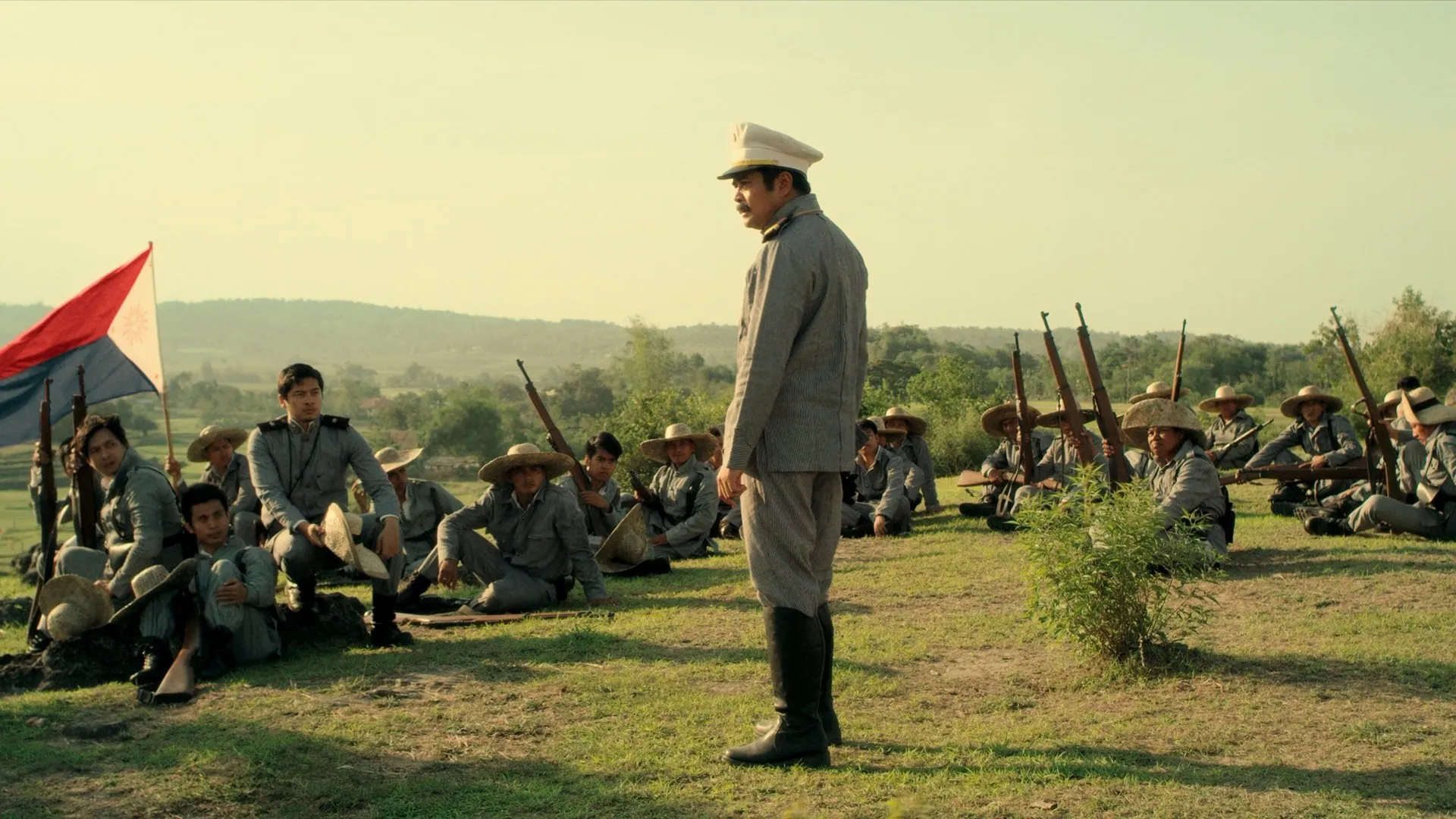
Synopsis: Set during the Philippine-American war, Heneral Luna, or Antonio Luna, is a Filipino general who tries to lead his countrymen to freedom from colonial powers, both new and old. In spite of internal conflicts, Heneral Luna and his army forges ahead, only to meet untimely demise.
**SPOILERS AHEAD**
Heneral Luna (the movie, not the general per se), is loved by Filipino audiences, including myself. It’s a breath of fresh air amidst drama-laden films that Filipinos are accustomed to. I love it so much that I re-watch it occasionally, especially when I’m feeling homesick.
And whenever I watch the movie, I can’t help but realize, for the nth time, that history does repeat itself. From Heneral Luna to the drug war waged by Duterte, the parallelism isn’t so subtle.
(You can watch it in Youtube, Netflix and Amazon Prime– depending on your region, of course.)
Because I’ve seen the movie several times, I’ve had the opportunity to analyze scenes that piqued my interest. Of course, the movie has many memorable sequences, but some specifically made me pause the film, think about it, and then write about it. One such example is this clip (watch carefully from the 2:06 mark) :
This sequence really piqued my curiosity in the whole movie. No matter how many times I watch it, I can’t help but ask, “Why did the director allocate precious moments of screentime for this particular shot?”
Chekov’s Gun, a key principle in dramatic writing, asserts that every element within a story must be relevant, with any irrelevant elements removed.
Therefore, it begs the question: Why is this scene relevant? What message does the writer/director want to convey to the viewers?
In the movie, Joven, the journalist (the guy in the white button-up shirt), has his hand shot. Could this symbolize the beginning of the end for freedom of speech? Is it a figurative representation of silencing the media? It could be, as the following scenes, not included in the clip above (you’ll need to watch the rest of the film), show Buencamino, the then Foreign Affairs Secretary, planting doubts in Aguinaldo’s mind about Luna’s intentions to seize power. This, of course, ultimately led to Luna’s death. Afterward, we see Luna’s loyal men “vanishing” one by one.
Nanlaban? (translation: they fought back?)
How Duterte’s drug war redefined the word ‘Nanlaban’
For context, the word nanlaban in modern Filipino usage has a political undertone. The word itself means “fought back” or “resisted”. But Duterte’s war on drugs turned it to a controversial and politically charged term.
During Duterte’s presidency, he waged a “war” against drugs. The idea behind the war was ‘noble’– a drug-free Philippines = safer country = more economic growth. But the execution was bloody, unconstitutional and inhumane.

Police officers murdered random citizens, including children, day after day, under the guise of the “war on drugs.” When asked each time why they killed these people, the response was always the same: “Nanlaban sila” (they fought back). This was true regardless of whether there was any evidence they were drug dealers, whether they had surrendered to the police a week prior, whether the arrests were illegal because they hadn’t been read their Miranda rights, or even if the victims were children. It simply didn’t matter to Duterte and his cronies.
For them, they all deserved to die.
The media covered these killings extensively, the airwaves laden with news of killings left, right and center. The situation reached a point where the ICC (International Criminal Court) and the UN (United Nations) became involved.
And yet, in spite of the noise, Duterte remained in power until his term ended.
History Repeats Itself: From Betrayal in Heneral Luna to the Muzzling of Media Today
This relates to the clip where Joven was shot in the hand—his dominant hand, the one he uses to write his pieces—as I believe the scene symbolizes the ‘death’ of press freedom and the nation’s freedom from colonizers.
During Duterte’s time, journalists and the media were heavily criticized, branded as “fake news” peddlers. They became targets of name-calling and vilification from Duterte’s mob of supporters. He imprisoned his staunc critics (Senator Leila de Lima and journalist Maria Ressa as prime examples). He silenced anyone who spoke against him in some way or another.
This is reminiscent of the scene where Apolinario Mabini (chief adviser to the president) and Emilio Aguinaldo (the First Filipino president during the Filipino-American War) were discussing Luna. In the film, Luna was a critic of the cabinet’s plan to negotiate with the Americans. Mabini brings up the deceased Bonifacio (another revolutionary leader), heavily implying Aguinaldo’s involvement in his death. Mabini also foreshadows in the scene that Luna could meet the same end if his dissent continues.
The movie Heneral Luna, though only a movie, is based on an actual person, a real-life General and hero of the country. As such, the movie serves as a mirror of Filipino society, whether in the past or present. At the end of the film, we see how Luna died in the hands of his fellows. Sadly, such is a recurrent theme in Philippine history.

Below: Spoliarium, a famous painting by Luna’s brother, Juan.

Overall, I highly recommend the movie Heneral Luna. You don’t have to be Filipino or even know what/where the Philippines is. The movie explores themes of nationalism, patriotism, betrayal and the cost of freedom–themes that we all universally relate to.